Still Streaming After Death: The Ghost Profiles Haunting Your Favorite Platforms
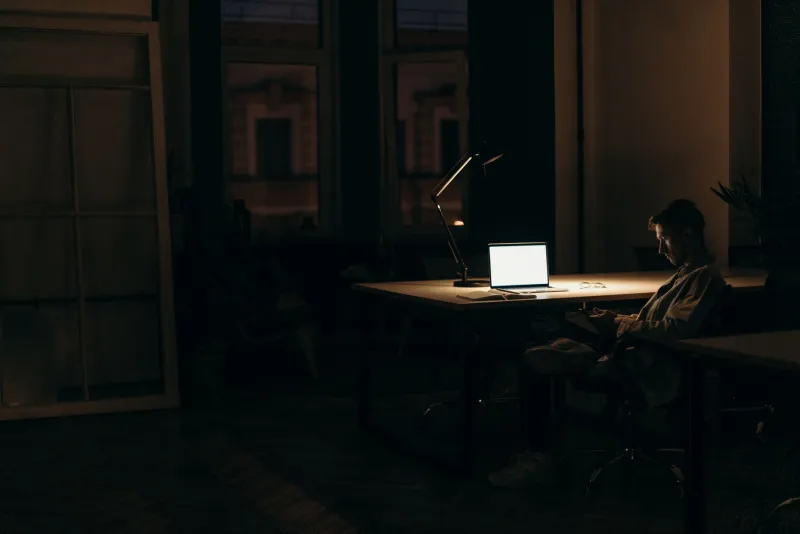
Somewhere in Netflix's servers, there's an account that hasn't been touched in three years. The watchlist is frozen mid-season. The "Continue Watching" row is stuck on episode four of something the owner will never finish. The billing card still processes every month, quietly, automatically, like a heartbeat no one thought to stop.
The person who made that account is gone. But their digital self? Still very much present.
The Quiet Accumulation of Ghost Accounts
We don't talk about this much, but streaming platforms are filling up with the profiles of the dead. It's not a morbid exaggeration — it's just math. Subscription services have been around long enough now that statistically significant numbers of their users have passed away. Netflix has been a household name since the early 2000s. Hulu has been around since 2008. These platforms have aged alongside their users, and some of those users didn't make it.
There's no official count, because platforms don't publish one. But researchers who study digital death — yes, that's a real field — estimate that Facebook alone will host more dead user profiles than living ones by 2070. Streaming services are a different beast, but the underlying dynamic is identical. People sign up. People die. The accounts linger.
What makes streaming profiles particularly strange is how personal they are. Your Netflix history isn't just a list of titles. It's a map of your moods, your obsessions, your late nights, your sick days. It's the true crime phase you went through in 2019 and the comfort sitcoms you rewatched during the hard months. It's weirdly intimate in a way that, say, an email inbox isn't.
What the Platforms Actually Do (Or Don't Do)
Here's the uncomfortable part: most streaming services have no formal process for handling deceased users' accounts. Their terms of service typically state that accounts are non-transferable and that subscriptions don't carry any inheritance rights. In plain language — when you die, your Netflix queue dies with you, at least legally speaking.
Practically, though? Nothing happens unless someone acts. If your family doesn't know your login credentials and your credit card keeps getting charged, the account just... continues. Netflix isn't going to reach out to verify you're still alive. Spotify isn't running obituary checks. The platforms have every financial incentive to let those subscriptions quietly roll over.
Some services will close an account if a family member contacts them with proof of death — a death certificate, some account verification. But the process is inconsistent, buried in support documentation, and emotionally brutal for grieving relatives to navigate. You're three weeks out from losing your mom and someone wants you to fill out a webform.
Apple has made some moves here. Their Digital Legacy program, introduced in 2021, lets users designate Legacy Contacts who can request access to their Apple account data after death. It's a start. But it covers Apple's own ecosystem, not the sprawling constellation of third-party subscriptions most people accumulate over a lifetime.
The Watchlist as Unintentional Memorial
There's something genuinely haunting about inheriting someone's streaming profile. People who've been through it describe the experience in strikingly similar terms — the disorientation of seeing a dead person's taste reflected back at you, the strange intimacy of their abandoned queue.
One Reddit thread from a few years back went quietly viral in grief communities. A user described logging into their late father's Hulu account to cancel it, then pausing when they saw his watch history. He'd been halfway through Ken Burns' Baseball documentary. He'd never finish it. The user couldn't bring themselves to cancel the account for months. It felt like closing a door.
That kind of experience is more common than platforms probably want to acknowledge. A streaming history becomes, almost by accident, a record of who someone was. What they found funny. What they watched when they couldn't sleep. What they kept coming back to. It's not a eulogy anyone wrote — it's something more unguarded than that.
Digital Wills and the Growing Movement to Plan Ahead
A small but growing number of people are starting to treat their digital lives the way previous generations treated physical property — as something that needs to be accounted for, sorted, and intentionally passed on (or deleted).
Estate planning attorneys are increasingly fielding questions about digital assets. While streaming accounts typically can't be legally transferred — you're licensing content, not owning it — people are finding workarounds. Some leave detailed instructions in physical documents: login credentials, account lists, explicit wishes about what should be canceled and what should be kept open for family to access.
Services like Everplans and Google's Inactive Account Manager represent the formal end of this movement. Informal digital will templates circulate in online communities focused on death positivity and end-of-life planning. The conversation is happening, even if the platforms themselves haven't caught up.
Some people are making more creative decisions. There are accounts of individuals recording video messages through streaming-adjacent platforms, or curating playlists and watchlists as deliberate acts of communication — something to be discovered later, a posthumous recommendation from beyond the algorithm.
The Industry's Convenient Silence
Streaming platforms benefit from not engaging with this question too directly. Acknowledging that your user base includes a meaningful percentage of dead people is not great marketing. And creating formal inheritance or legacy systems would require legal infrastructure, customer service investment, and — perhaps most uncomfortably — confronting the fact that the subscription model is quietly extracting money from grieving families who haven't gotten around to canceling yet.
There's no villain here, exactly. It's more like a collective shrug from an industry that built its model around frictionless sign-up and never thought too hard about the other end of the equation.
But the question isn't going away. As the generations that grew up with streaming start to age, and as digital life becomes more thoroughly entangled with actual life, the ghost account problem is going to get louder. At some point, platforms will have to reckon with what they do with the data of the dead — the watchlists, the ratings, the carefully curated profiles that no living person is tending anymore.
What You Leave Behind
There's a version of your streaming profile that is, in some small and weird way, a self-portrait. The stuff you watched when you were happy, when you were sick, when you were up at 3 AM and couldn't explain why. Algorithms have been studying that portrait for years, building models of your preferences that are probably more accurate than you'd be comfortable admitting.
When you're gone, that portrait stays. Sitting in a server somewhere, untended, still technically generating recommendations for a viewer who will never see them.
Maybe that's nothing. Maybe it's just data. Or maybe — and this is the part that's harder to shake — it's the closest thing to a ghost that the modern world actually produces. Not a presence, exactly. More like a signal that forgot to stop transmitting.