3 AM Television: Why Dead Air and Test Patterns Feel Like Home
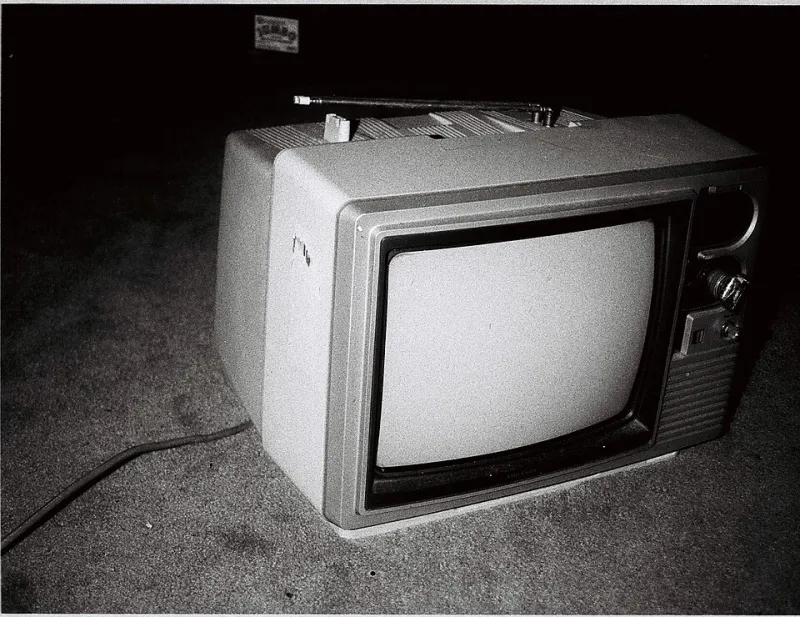
Photo: Matthew Paul Argall from Australia, CC BY 2.0, via Wikimedia Commons
I want to tell you about a YouTube channel that streams nothing but a looping EAS tone, a color bar test pattern, and the occasional snippet of a 1987 furniture store commercial. It has tens of thousands of subscribers. The comments are warm, almost tender — people saying things like this is the most relaxed I've felt all week and I fell asleep to this and had the best dreams.
That's not a niche phenomenon anymore. It's a whole mood, and it's spreading.
The Aesthetic of Nowhere
Liminal spaces — those threshold zones that feel simultaneously familiar and wrong, like an empty mall food court at midnight or a hotel hallway with no guests — have been a dominant internet aesthetic for a few years now. But there's a specific broadcast version of this that doesn't get talked about enough: the uncanny valley of late-night and off-hours television.
Think about it. Before 24-hour programming became standard, TV stations literally signed off. They'd play the national anthem, display a test pattern, and go dark. There was dead air. There was static. The television set, that glowing centerpiece of American domestic life, would just... stop. And something about that stopping — that honest acknowledgment of limits — feels almost radical now.
For people who grew up channel-surfing in the '90s and early 2000s, there's a specific texture to that era's television that's hard to describe without sounding a little unhinged. The particular blue glow of an infomercial at 3 AM. The strange intimacy of public access cable, where local weirdos hosted cooking shows and guitar lessons with zero production budget and total sincerity. The way certain channels would just loop a weather map with smooth jazz underneath it for hours.
Nobody designed that stuff to be aesthetically compelling. That might be exactly why it is.
Authenticity by Accident
Here's my actual theory: we're drawn to liminal broadcast media because it's one of the few places left where nothing is trying to manipulate us.
Modern content — streaming originals, algorithmic social media, even prestige television — is engineered. Every frame is calibrated for engagement, retention, emotional response. The platforms know how long you pause, what makes you keep scrolling, what thumbnail gets the click. The result is content that's extraordinarily polished and, in a subtle way, exhausting. You're always being optimized at.
A 1994 local news broadcast from a station in Tulsa, Oklahoma? That thing was made by people who were just trying to do their jobs. The anchor's haircut is a little off. The graphics look like someone figured out WordArt last week. The commercial breaks are for businesses that probably don't exist anymore. Nobody was A/B testing the emotional arc. It just... happened, and was recorded, and now exists as this accidental artifact of a specific moment in time.
There's a realness to that which contemporary media can't fake, even when it tries to.
The Communities Keeping the Weird Stuff Alive
If you want to understand how seriously people take this, spend some time in the corners of the internet dedicated to it. There are Discord servers devoted entirely to sharing and cataloging public access television from specific regions. YouTube channels with names like "Forgotten Frequencies" or "The Overnight Broadcast" pull in surprisingly large audiences by streaming vintage local TV, complete with original commercials.
The r/obscuremedia and r/lostwave communities function as something between fan clubs and preservation societies, with users trading VHS rips of regional programming that never made it to any official archive. Someone will post a clip of a low-budget children's show that only aired in the greater Cincinnati area in 1989, and the thread will fill up with people saying they grew up watching it, people who had never seen it before expressing genuine delight, and a few obsessives trying to track down every episode.
There are also dedicated streams — some of them impressively sophisticated — that recreate the experience of watching cable television from a specific decade. Not just the shows, but the commercials, the station IDs, the interstitials, the channel-flipping randomness. They're not trying to be ironic about it. They're genuinely trying to reconstruct a feeling.
The Infomercial as Art Form
I'd argue — and I recognize this is a bold claim — that the late-night infomercial is one of the most underrated American art forms of the late 20th century.
Not because they were good, exactly. But because they were sincere in a way that's almost painful to watch now. The hosts believed in the products. The testimonials were delivered by real people who were not actors. The production values were just high enough to be professional and just low enough to feel human. There was a desperation and an optimism baked into every frame — someone, somewhere, was betting everything on the idea that you needed a dehydrator or a set of commemorative coins or a workout system that would change your life.
Gen Z viewers encountering these things for the first time often describe them as "surreal" or "dreamlike," and I think that's accurate. They exist in a different register than contemporary advertising, which is too knowing, too self-aware, too aware that you know it's trying to sell you something. The old infomercial didn't have that defensive layer. It just wanted you to call now.
What We're Actually Nostalgic For
Here's the thing about nostalgia for liminal broadcast media: a lot of the people who feel it most strongly are too young to have actually experienced it. Gen Z wasn't watching off-air test patterns. They grew up with streaming. The yearning isn't really for a specific lived memory — it's for a quality that memory represents.
What that quality is, I think, is presence. The sense that media was happening in real time, that it was connected to a physical place and a specific moment, that it could end. Broadcast television, even at its most commercial and calculated, was embedded in the texture of daily life in a way that on-demand streaming just isn't. You had to be there. You had to catch it.
We've gained enormous convenience and lost something harder to name. The static at the end of the broadcast wasn't just dead air — it was a kind of punctuation. It said: this was a thing, it happened, and now it's over.
Maybe that's what we're tuning in to find. Not the content. The ending.