Grain, Glitch, and Ghost Tape: Why Gen Z Is Reaching for the Analog World
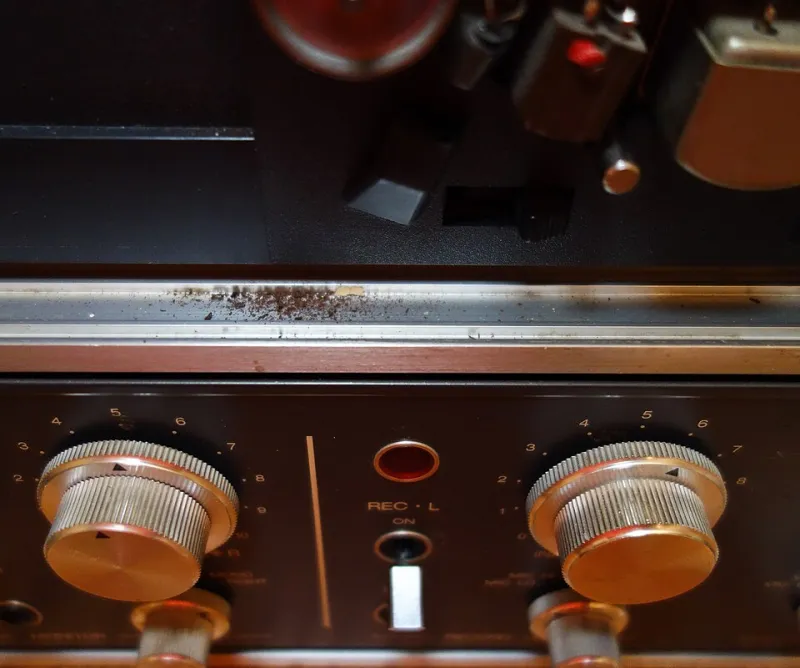
Photo: Danielteolijr, CC BY-SA 4.0, via Wikimedia Commons
Somewhere in a college dorm in Columbus, Ohio, someone is dubbing a mixtape onto a cassette they bought from a thrift store for seventy-five cents. They have a Spotify account. They have Apple Music. Their phone has more storage than every hard drive in their childhood home combined. They are still making the tape.
This is the thing that confuses older observers most about Gen Z's relationship with analog media. It's not that they don't understand digital. They built their lives inside it. So when they turn around and reach for VHS camcorders, hand-printed zines, and music recorded through busted cassette decks, it reads as a contradiction. It isn't one.
The Polished Surface Problem
Let's start with what Gen Z actually grew up consuming. Corporate-grade content. Streaming platforms with nine-figure production budgets. Instagram grids curated to within an inch of their lives. TikTok feeds where even the "authentic" moments are lit, framed, and soundtracked. Music produced to hit streaming algorithm checkpoints. Games marketed through trailers that cost more to produce than most indie films.
Everything was smooth. Everything was optimized. And the optimization was visible — not in an impressive way, but in a slightly suffocating one. The seams were gone, but so was everything that made the seams interesting.
When the entire surface of your media environment is polished to the same sheen, it stops registering as individual expression and starts feeling like a single, continuous corporate texture. And that's when people start looking for the grain.
VHS Isn't Nostalgia If You Weren't There
Here's the thing critics get wrong about Gen Z's analog turn: they keep calling it nostalgia. But most of Gen Z has no personal memory of VHS culture, of zine distros, of pre-internet music discovery. They didn't live through the era they're reaching toward. So what they're experiencing isn't nostalgia in any traditional sense.
It's something more like aesthetic archaeology — digging into a past they didn't inherit and pulling out the parts that feel like they mean something.
The VHS aesthetic, for instance, carries specific visual information: scan lines, color bleed, the slight warping of footage over time. These aren't flaws that Gen Z is tolerating for the sake of authenticity. They're features. They communicate time. They communicate impermanence. They communicate that whatever you're watching existed in a physical object that degraded, that could be recorded over, that was vulnerable in ways a digital file is not.
In a media environment where nothing ever truly disappears — where everything is archived, screenshotted, and indexed — the idea of a format that decays is genuinely radical.
Zines and the Rejection of Scale
The zine revival is maybe the most pointed version of this cultural signal. A zine is, by definition, not scalable. You write it, you lay it out, you print it, you fold it, you staple it. You make maybe two hundred copies. You sell them at shows or mail them out or leave them in record stores.
This is the opposite of content strategy. There is no SEO. There is no A/B test. There is no monetization funnel. A zine is just a person with something to say and a Xerox machine.
And yet zine fairs across the US — in cities like Chicago, Portland, Philadelphia, and New York — have seen surging attendance from Gen Z audiences over the past several years. Publications like Zine Scene and countless local operations have documented the demographic shift. These aren't older collectors keeping a tradition alive. These are twenty-year-olds making zines about their favorite obscure games, their neighborhood's disappearing architecture, their feelings about parasocial relationships.
The medium is the message, and the message is: not everything needs to reach everyone.
Lo-Fi Production as Creative Manifesto
In music, the analog turn has produced some of the most interesting production choices of the decade. Artists across indie, hip-hop, and experimental spaces are deliberately degrading their sound — recording through cheap microphones, adding tape hiss, clipping the signal in ways that major-label production would never allow.
This isn't because they lack access to better tools. It's because the "better" tools produce a sound that feels like it belongs to the industry rather than to a person.
Bedroom pop, which emerged as a significant force in American indie music through artists like Rex Orange County and Clairo, built its entire aesthetic identity on the audible presence of the recording environment — you could hear the room, hear the laptop fan, hear the imperfection of a human performing in a space not designed for performance. That imperfection became the signal of authenticity in a way that a $10,000 studio session simply couldn't replicate.
The same logic is spreading into gaming communities, where deliberately lo-fi aesthetics — chunky pixel art, limited color palettes, intentionally crude UI — have become markers of indie credibility and personal vision. Games like Dusk, Lunacid, and Caves of Qud wear their rough edges like a badge. They're not trying to look like AAA titles. They're actively trying to look like they couldn't.
It's Not Anti-Technology. It's Anti-Optimization.
The most important distinction to make here is that Gen Z's analog turn is not technophobic. These are not people who want to go back to a world without the internet. They're using Discord to organize their zine swaps. They're posting their VHS footage to YouTube. They're building Bandcamp pages for their cassette releases.
What they're rejecting is a specific mode of technology: the mode that optimizes everything for scale, for engagement, for the flattening of difference into what performs best across the widest possible demographic.
Analog formats resist that mode structurally. A zine can't be A/B tested. A cassette can't be recommended by an algorithm. A VHS tape recorded on a $30 camcorder from a pawn shop doesn't have a production pipeline behind it.
These formats carry, by their nature, the evidence of human decision-making — imperfect, specific, unoptimized human decision-making. And in a media environment that has largely engineered that evidence out of existence, its presence feels like something worth holding onto.
The Signal Worth Taking Seriously
It would be easy to dismiss all of this as aesthetic trend-chasing — the same way previous generations dismissed grunge or punk before recognizing them as genuine cultural ruptures. But the analog revival has too much internal logic to be written off that easily.
When a generation that has never known a world without smartphones starts deliberately building media practices around formats that predate their parents' adulthoods, that's not nostalgia. That's a statement. It's a refusal to accept that the most optimized version of something is automatically the best version.
Out here at Voidcast, we've always believed that the most interesting signal comes from the edges — from the places the mainstream hasn't fully mapped yet. The analog turn is exactly that kind of signal.
The grain isn't a flaw. It's the point.