Sealed in the Dark: The Rare Collectibles That Exist Only in Rumor and Shadow
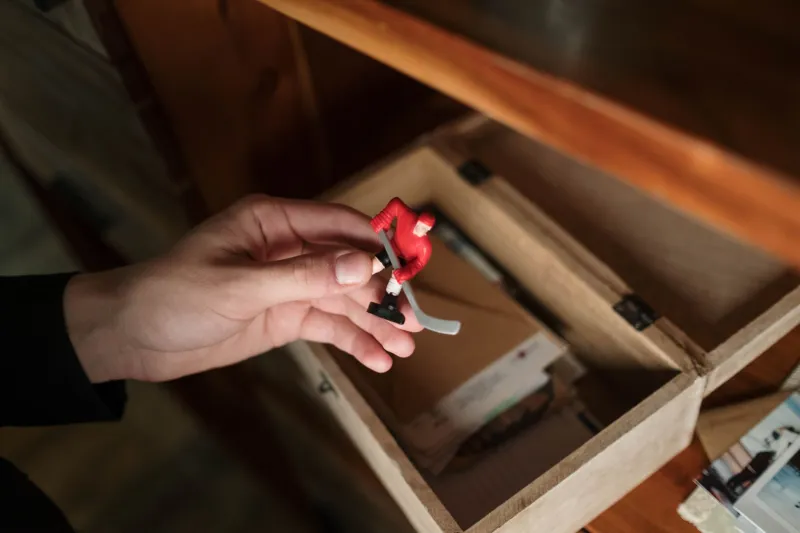
There's a particular kind of frustration that lives in collector communities — the kind that comes from knowing something exists and being completely unable to see it. A limited pressing. A convention-exclusive variant. A numbered run of two hundred that sold out in forty seconds and then disappeared entirely into private hands. The item is real. The receipt is real. But the object itself has effectively ceased to exist for everyone who didn't buy it.
This is the shadow economy of rare collectibles, and it's bigger, stranger, and more deliberately obscure than most people realize.
The Moment of Purchase Is the Moment of Disappearance
Limited drops have always carried a certain mystique, but the mechanics of that mystique have changed. In the early days of collector culture — think baseball cards, first-edition comics, early vinyl pressings — scarcity was often accidental. Items became rare because time happened to them. Now, scarcity is engineered from the first announcement. Brands and artists deliberately manufacture limited quantities, build countdown timers, and create drop events designed to feel like a broadcast from a frequency you might miss.
What nobody talks about is what happens after the cart empties.
A significant portion of high-end limited collectibles — art toys, numbered prints, exclusive action figures, variant comic covers, boutique sneaker runs — are purchased and then sealed. Not displayed. Not photographed for the 'gram. Just boxed, stored, and held. The buyer becomes the sole custodian of an object that the rest of the world can only reference in secondhand descriptions and blurry convention-floor photos.
"I have pieces I've never opened," says one collector based out of Portland who asked to remain anonymous. "Not because I'm planning to flip them. Just because opening them feels like... releasing something. The sealed state is part of the value. The mystery is part of the value."
That's a sentence worth sitting with.
Social Media as Both Proof and Fog
Here's where things get genuinely weird. Social media was supposed to make ownership visible. Unboxing culture, haul videos, shelfie aesthetics — the entire infrastructure of collector communities online is built around the display of acquisition. You buy the thing, you post the thing, the algorithm rewards the thing.
But for a specific subset of high-value or deeply personal collectibles, the opposite dynamic plays out. The item is purchased quietly. Maybe a single cryptic post goes up — a box corner, a shipping label with the return address cropped, a blurred photograph that confirms something arrived without confirming what. Then silence.
This creates a paradox that collector communities are genuinely obsessed with. The post proves ownership but obscures the object. The documentation functions as both evidence and misdirection. You know someone has it. You don't know what "it" looks like in full light, in hand, outside the packaging. The object exists in a kind of permanent pre-reveal state.
On forums and Discord servers dedicated to specific collectible lines, you'll find threads that read like archaeological digs. Members piecing together partial images, cross-referencing shipping weights from unboxing videos, trying to establish whether a reported colorway actually shipped or whether someone is lying about owning it. The energy is less "fan community" and more "cold case investigation."
The Ghost Market
When sealed collectibles do eventually change hands, they often do so through channels that leave almost no public trace. Private DMs. Collector-only Discord servers with invite-only access. Word-of-mouth chains where a piece moves from one trusted hand to another without ever surfacing on eBay or StockX.
This isn't always about avoiding taxes or platform fees, though that's certainly part of it. For many serious collectors, the underground transfer is itself a kind of ritual. The item was born in a limited drop. It should move through the world with the same controlled, selective energy. Selling it publicly would cheapen the mystique.
"There are pieces I've bought and sold that have no public record," one reseller based in Chicago explains. "No listing, no completed auction, no forum post. The transaction happened in a DM and the piece moved. As far as the internet is concerned, it doesn't exist."
The result is a ghost market — a parallel economy of real objects trading at real prices with no publicly accessible price history, no documentation trail, and no way for outside observers to verify what's actually circulating. Collectors who operate in these spaces develop a kind of sixth sense for valuation, drawing on private knowledge, community reputation, and gut instinct rather than any market data a casual buyer could find.
Why Does the Darkness Feel Like the Point?
It's tempting to frame all of this as purely financial behavior — people protecting asset value, keeping comps off the record, controlling supply perception. And sure, some of it is that. But spend enough time in these communities and a different motivation starts to surface.
For a lot of serious collectors, the invisibility of their collection is a feature. These aren't people who want a trophy shelf. They want a private archive. The objects mean something to them specifically, and the meaning is actually diluted by public exposure. Every unboxing video, every Instagram post, every forum reveal makes the item slightly more ordinary — slightly more a part of the general visual noise of collector culture rather than something genuinely personal.
There's also something almost ritualistic about the sealed object. A figure still in its box, a print still in its tube, a record still in its shrink wrap — these items exist in a suspended state that feels different from objects that have been opened, handled, displayed. They carry potential. They haven't been fully realized yet. Some collectors seem to be addicted to that suspended state, accumulating sealed objects the way some people collect unopened letters.
The Void Acknowledges the Void
Collector culture has always had a dark side — the hoarding, the gatekeeping, the quiet satisfaction of having something nobody else can touch. But the specific phenomenon of items that exist publicly as rumor and privately as physical object feels like something new. Or maybe something newly visible.
The internet was supposed to make everything findable. Every piece of culture, every manufactured object, every limited run — someone would document it, someone would photograph it, someone would post the receipt. The assumption was that visibility was inevitable.
But the collectors who operate in the dark have figured out that invisibility is a choice. And for certain objects, in certain hands, the choice to remain unseen is the most powerful thing they can do with what they own.
Somewhere right now, something you'd want to see is sitting in a sealed box. It's real. It's numbered. It's yours in the sense that you could theoretically find it if you knew the right people and asked the right questions in the right private channel.
But you won't. And honestly? That's kind of the whole point.