The Dumpster Behind the Station: Volunteers Are Racing to Save Local TV News

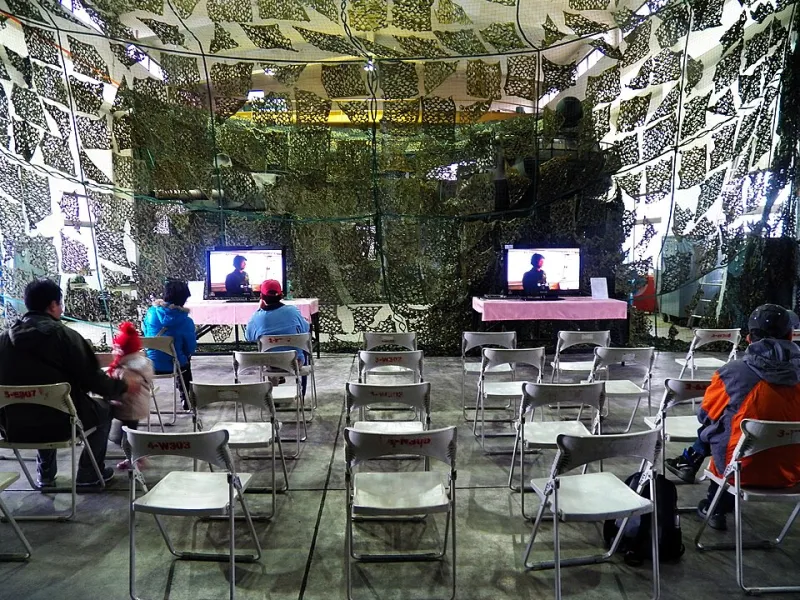
Photo: Bernard DUPONT from FRANCE, CC BY-SA 2.0, via Wikimedia Commons
The call came in on a Tuesday. A station in the Midwest was moving to a new building, the engineering manager was retiring, and there were pallets in the basement nobody had touched since the Clinton administration. The volunteer on the other end of the line asked the only question that mattered: is there a dumpster scheduled?
There was a dumpster scheduled.
The dock at six in the morning
What follows is a scene that has played out in dozens of American cities over the past few years. A rented van. A borrowed hand truck. Two people in their sixties hauling gray plastic cases up a loading ramp while a station employee holds the door and says, apologetically, that he's sorry he didn't call sooner. Inside the cases: U-matic cassettes, Betacam SP, a few reels of two-inch quad so heavy they need two people and a bad attitude.
The retired engineer who tipped them off goes by Dale online and asked me not to use his last name, mostly because he doesn't want his former employer to feel bad. “They weren't being villains,” he said. “Tape was expensive in 1987. If the news director wanted to keep a fire, he kept the fire. Everything else got run through the degausser so the sports department could have new tape on Monday.”
Why the tape got reused
That's the whole tragedy in one sentence, and it's an economic one. Broadcast videotape cost real money, storage cost real money, and nobody in 1979 imagined a future in which someone would want to watch a thirty-second stand-up about a city council rezoning vote. So the tape got erased and shot over, week after week, until the machine wore out.
National news is a different story. The Vanderbilt Television News Archive has been recording network evening broadcasts since 1968, and the Library of Congress has been hoovering up public broadcasting for years. But “local” is the word that falls through every institutional crack. There are roughly 200 television markets in the United States. Each one produced hours of news a day, every day, for seventy years. The math is vertiginous.
What's actually on those reels
Ask a preservationist what's worth saving and you get an answer that sounds unhinged until it doesn't. Weather coverage from a tornado outbreak, because it's the only moving-image record of what a neighborhood looked like before the rebuild. Election night returns from a county that no longer exists as a jurisdiction. A high school football state championship, taped by a sports anchor on his own time, featuring four kids who died young.
And then the quiet stuff. The obituaries segment. The farm report. The livestock auction prices that a regional economy ran on. The last five minutes of a newscast on a Friday in 1994 when the anchor, who had been on that desk for twenty-two years, said thank you and meant it.
“People think local news is boring,” a volunteer cataloguer in the Pacific Northwest told me. She runs a small digitization setup out of a converted garage and has logged more than 3,000 tapes. “It's not boring. It's granular. It's the only footage of ordinary American life shot by professionals, with a date stamp, in the actual place it happened.”
The garage with four decks
The work itself is unglamorous and hands-on. You need a working deck — a machine that plays a format that stopped being manufactured decades ago — plus a capture card, a time base corrector, and a tolerance for the fact that you'll spend three hours on a bad cassette and get forty minutes of usable picture. Parts come from eBay, from estate sales, from a man in Ohio who fixes transports for beer money.
The cataloguing is worse. A tape labeled “6 PM 3/14” tells you nothing. So volunteers watch. They note the segment slugs, the reporter names, the sponsor bumpers, the station IDs. Some build spreadsheets with forty columns. One group maintains a shared index so that two stations in different states don't duplicate a week of the same syndicated feed.
Sticky-shed and other clocks
There are two deadlines, and they're both moving. The first is institutional: stations are digitizing to save space, and the stuff that doesn't get picked for digitization goes out the back door. The second is chemical. Tape stock from the 1970s and 1980s is starting to shed its magnetic coating — the condition archivists call sticky-shed syndrome — and every playback runs the risk of being the last one.
Which means the volunteers are making judgment calls no archivist should have to make. Bake the tape to stabilize it, or save it untouched for someone with better equipment? Capture everything at low resolution now, or a fraction at broadcast quality later? Nobody is funded enough to do it right, so everybody does it fast.
The sign-off counts
There's a version of this story that ends with a triumphant institutional rescue. A university takes the collection, a grant covers the digitization, and the whole thing lands in a searchable database. That happens sometimes, and it's worth celebrating when it does.
More often, it ends with a hard drive in somebody's closet and an agreement that the file gets copied to two other people who promise to keep it alive. Not a museum. Not a catalog record. Just an ordinary person deciding that the last time an anchor signed off in a town of 12,000 people, that was worth keeping.
If you've got a relative who worked at a station, ask what happened to the tape. Ask now. The dumpster gets emptied on Friday.