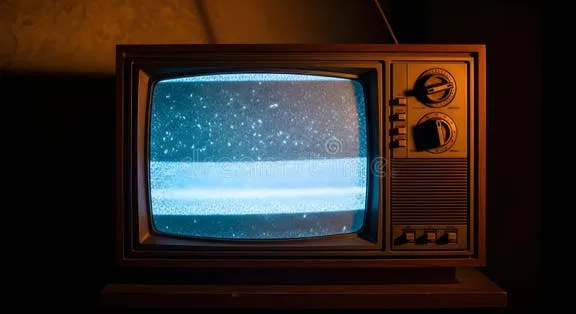
Released Into the Void: The Movies That Arrived When No One Was Looking

Photo: Famartin, CC BY-SA 4.0, via Wikimedia Commons
There's a specific kind of quiet that happens when a film nobody knew existed suddenly stops existing. No reviews. No tweets. No Reddit thread asking if anyone else caught it. Just a title card on a streaming platform, briefly visible if you scrolled at exactly the right moment on exactly the right night, and then — nothing. Not even a memory.
This isn't about box office disappointments. We're not talking about movies that got hyped and flopped. We're talking about something stranger: films that were never really introduced to the world in the first place.
The Anatomy of an Invisible Release
Here's how it tends to go. A film gets a theatrical release — technically. It opens in a handful of markets, maybe fifteen screens nationwide, on a Thursday night at 10:45 PM. No press junket. No trailer cycle. A poster that looks like it was generated in thirty minutes by someone who had already mentally checked out. By Sunday, it's gone from those screens. By the following Friday, it's available to rent on demand for $5.99. Two months later, it quietly lands on a mid-tier streaming platform. Six months after that, it's been removed.
The whole thing plays out like a transaction nobody wanted to complete but felt legally obligated to.
Industry observers have a few names for this. Some call it a "contractual release" — a film that has to be put out in some form to satisfy financing agreements, distribution contracts, or talent deals. Others call it "strategic burial," which sounds more sinister but might just be accurate. The idea is that a studio, for various reasons, wants a film to technically exist in the market without actually competing in it.
Why Would Anyone Want a Film to Fail?
This is where it gets genuinely strange, because the motivations are more varied than you'd expect.
Tax considerations are the boring-but-real answer. Depending on how a production is structured, a film that loses money can serve a financial purpose for its backers. A quiet release that generates minimal revenue isn't always a failure — sometimes it's the goal. This is an old Hollywood trick that predates streaming by decades, but the digital age has made it significantly easier to execute. You don't need to actually not book theaters anymore. You just book them badly.
Then there's the talent management angle. Sometimes a film exists because a major studio owed a producer, director, or star a greenlight — a favor being cashed in, a contract being honored. The studio never believed in the project. They made it because they had to. Getting it out of the way quietly is just closing the loop.
Contract disputes are another culprit. When a film gets caught in legal crossfire — rights disagreements, post-production falling-outs, financing partners who can no longer be publicly acknowledged — a fast, invisible release can satisfy the letter of an agreement without drawing attention to whatever's actually going on behind the scenes.
The Streaming Era Made This Way Too Easy
Before the streaming boom, burying a film required some visible effort. You had to book bad screens, pick terrible release dates, actively suppress marketing. People in the industry noticed. There were paper trails.
Streaming changed the geometry of this entirely. A platform with tens of thousands of titles can absorb a new addition with essentially zero ceremony. No announcement email. No featured placement. No algorithm boost. The film just materializes in the catalog like it was always there, unannounced and unsurfaced, waiting for someone to stumble across it by accident.
The release "window" collapses too. A film can go from a technically-qualifying theatrical run to a streaming listing in weeks, and the whole process can be documented with timestamps that satisfy any contractual definition of a "wide release" while reaching approximately no one.
Some streaming platforms have actually become known in certain industry circles as soft landing spots for these kinds of projects. Not naming names here, but if you've ever browsed a particular platform's catalog at 1 AM and found yourself staring at a film with a recognizable cast, a $40 million production budget implied by its visuals, and literally zero external coverage — you know what we're talking about.
What the Films Themselves Sometimes Reveal
Here's the part that pulls you in if you're the kind of person who reads this site: the films themselves are often fascinating.
Not always good. But fascinating.
Because when a movie gets made without real studio interference — when nobody cared enough to sand down the edges — you sometimes get something genuinely strange. A director's unfiltered choices. A script that nobody bothered to workshop into palatability. Performances that feel weirdly raw because there was no press cycle to shape how actors talked about the work publicly.
There's a small but dedicated community of viewers who specifically hunt these releases. They monitor distribution filings, track streaming catalog additions in real time, cross-reference cast announcements with theatrical booking data. They find these films before they disappear, or sometimes after, through archive tools and regional streaming libraries.
What they report finding isn't always bad cinema. It's often just... unmediated cinema. Which, depending on your taste, can feel like finding a signal nobody else is tuned to.
The Questions That Don't Get Answered
The frustrating part of reporting on this phenomenon is how hard it is to get anyone to talk on record. Studios don't comment on release strategies for underperforming titles. Distribution partners redirect inquiries. Filmmakers themselves are often bound by NDAs or simply don't want to publicly litigate why their movie vanished.
What you're left with is pattern recognition. You notice that certain production companies consistently release films this way. You notice that certain talent deals seem to produce projects that evaporate. You notice that specific streaming platforms seem to accumulate these invisible titles at a higher rate than others.
None of that is a confession. But it starts to feel like a map.
Signals From Somewhere
Maybe the most honest thing to say is this: the entertainment industry produces more content than it knows what to do with, and not all of it was ever meant to be found. Some of it is genuinely lost to mismanagement. Some of it is deliberately parked out of the way. Some of it is the artifact of financial structures that treat creative work as an accounting variable.
But somewhere in that noise, there are films that deserved better. Films that got made by people who cared, then handed off to systems that didn't.
They're out there in the catalog. Unindexed, unreviewed, un-recommended. Waiting for someone to scroll far enough.
If you know where to look — and if you're reading this, you probably do — that's not a dead end. That's an invitation.